
Detroit mobster Nick Licata went to Los Angeles in the 1930s and flourished in Jack Dragna’s Mafia Family. His son Carlo returned to the city of his birth, to meet a tragic end.
The Licata family of Camporeale, an inland comune in the province of Palermo, Sicily, were outsiders among the close-knit Detroit Partnership, whose leading families were from Terrasini, on the coast.
Nicola Licata was born and baptized in Camporeale on 20 March 1897, the son of Calogero Licata and Vita Mustacchia.

Nicholas, or Nick, emigrated from Sicily in 1913, joining his parents and siblings in South Williamsburg, Brooklyn. From there, Nicholas probably made the move to Detroit almost immediately upon his arrival in the United States. According to self-report at an April 1929 border crossing from Canada into Detroit, Nick had lived in the Motor City since 1912.
His brother Vincent joined him in Detroit, where he worked in an auto factory. Their father, Calogero, and brother, Domenico, moved to Cheyenne, Wyoming, where Calogero died in 1921. Domenico moved to California sometime after Nicholas, and died in Los Angeles County in 1945. Their widowed mother died in Detroit in 1923, and was buried next to her husband in Cheyenne.

Prohibition began in May 1918 in Michigan. That same month, Nick’s brother Michele, who was only 23, died in Brooklyn from natural causes. Another brother, Leonardo, remained in New York. By this time, Nicholas was likely already in Detroit, as one of the country’s earliest bootleggers. Several sources say Nicholas was made in Detroit, but I haven’t found the original claim or any details to corroborate it, such as who his associates were.
The first record I found for Nicholas Licata in Detroit was the late 1923 marriage license application for his wedding to Josephine Cracchiolo in January 1924. With the exception of his brother Vincent, who was a laborer all his working life in Detroit, none of Nicholas’ close male relatives were nearby. It’s Nicholas Licata’s father-in-law, Vincenzo “James” Cracchiolo, who stands out as his likely mentor. Cracchiolo’s profession distinguished him as a possible padrone. In a community where most men were common laborers, Cracchiolo was a pioneering real estate agent who thrived during the most trying economic years in US history. The other factor that gave Cracchiolo an “in” with the local power base was his hometown of Terrasini.
Vincenzo Cracchiolo was a laborer, a husband, and a new father when he emigrated to Detroit in 1901. Vincenzo and his wife, Francesca Maniaci, both Terrasini natives, married in their hometown in 1898. Their first child, Vita, was born there and emigrated in 1902 with her mother. When Vita Cracchiolo married in Detroit in 1915, Vincenzo was still a common laborer, but with the advent of Prohibition in 1918, he became a naturalized citizen and self-employed real estate agent.
While Vincent Licata worked blue-collar jobs, Nick and his father-in-law, James Cracchiolo, were both real estate agents through the Great Depression. Nick Licata became a naturalized citizen in 1931. His brothers-in-law, James Cracchiolo’s sons, joined him in the real estate business.
According to the legend, Nick Licata’s comfortable position in Detroit was pulled out from under him when he somehow offended Joseph Zerilli, one of the most powerful gangsters in the city.

Founding Detroit Partnership members Joe Zerilli and Vito Tocco were in Sam Giannola’s gang together, before there was a unified Mafia controlling Detroit. Vito “Black Bill” Tocco was the Partnership’s first boss. Daniel Waugh calls Zerilli and Tocco cousins—Zerill’s mother was a Tocco—but they do not have any grandparents in common. Joseph Zerilli’s mother, Rosalia Tocco Zerilli, born in 1878, was the daughter of Pietro Tocco and Grazia Ventimiglia. She is of no known relation to Vito Tocco, son of Giacomo. Nor is she closely related to Detroit gangster Peter Dominic Tocco (1947-2024), whose family is from Terrasini.
(The extended Tocco-Zerilli family is confusing, with lots of intermarriage and repeated surnames. To see it all laid out, join Mafia Genealogy on Patreon. One of the many Member Rewards is an extended Detroit Mafia family tree that includes all of the names I’ve mentioned and more people of interest in the Detroit Partnership.)
Marriage ties were particularly important to the Detroit Partnership, beginning with Black Bill’s marriage to Rosalia Zerilli in 1923, in which one of the witnesses was Chester Lamare, the ambitious mafioso who lured Gaspar Milazzo to his death in 1930. After Tocco died in 1972, his brother-in-law Joe Zerilli became the boss. And before Zerilli’s death, he named Bill’s son, Jack, to be his eventual successor.
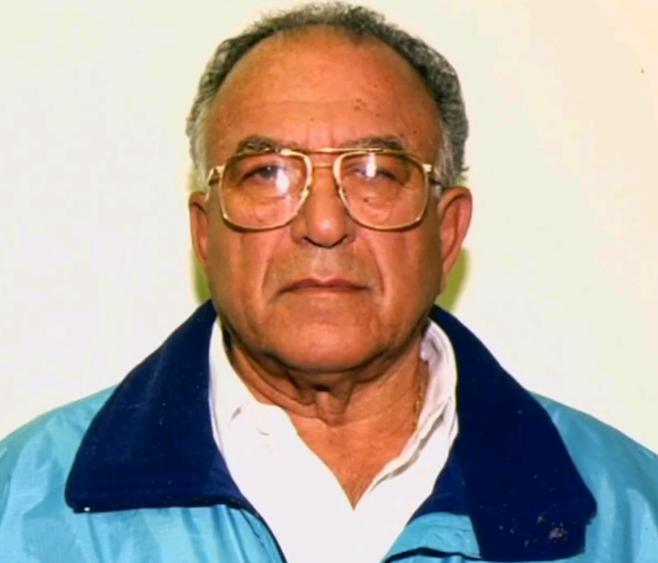
According to most sources, Zerilli put out a hit on Licata in the early 1930s, forcing Nick to move his family to Los Angeles County, California. His brother Domenico soon joined him from Wyoming. Nick Licata proved to be a good earner in California, and made himself so popular with the Dragnas, first with the boss, and then his brother, consigliere Tom Dragna, that Jack Dragna negotiated with Detroit to nullify the contract. This story is often repeated, but no details are ever offered as to the nature of the disagreement. Neither of the Detroit Mafia experts I consulted could add to the story, nor did Jack Dragna’s biographer have any details on the conflict he reportedly mediated.
Nick Licata lived in Inglewood, in Los Angeles County, and the FBI was aware that he was a bookmaker and loan shark who also owned bars and apartment buildings (the latter an evident carryover from his Detroit career in real estate). In 1940 he moved a short distance northwest to Culver City. Licata’s headquarters were a cafe in Burbank. He was arrested just once, in 1945, for refilling liquor containers.
Nick and Josie had three children: Calogero, or Carlo, was the oldest, followed two years later by Vitina, called Tina, and Frances, who was born shortly after their arrival in California. In the 1950 census, Carlo still lived at home and was co-owner with his father of a restaurant.
In 1951, Nick provided an alibi to “Jimmy the Weasel” Fratianno, who killed two stick-up artists from Kansas City, Anthony Brancato and Anthony Trombino, suspected of holding up the Frontier Hotel. Licata was arrested and charged with their execution, but acquitted by a jury.

After the 1950 census, Nick’s son Carlo Licata moved to San Diego, where he shared a house with “Jimmy the Weasel” Fratianno, and looked after his father’s interests in a gambling establishment popular with military personnel called the Navy Club. Carlo was there for a year or two as a part of Frank Bompensiero’s crew, during which he formed a food and beverage distribution company with his father and some of their criminal colleagues.
Echoing his father’s actions thirty years earlier, Carlo then moved to Detroit and joined the crew headed by Jack Tocco, son of founding Detroit boss Vito “Black Bill” Tocco. He married Jack’s sister, Josephine Tocco, in 1953. In one article I found, Scott Burnstein mistakenly calls Carlo’s bride the youngest Tocco sister, Grace, who was known as “Babe.” A California Assembly report and other secondary sources confirm that Carlo married Josephine, not her younger sister Grace, but there are still many online resources who say Carlo married Grace Tocco.
Carlo Licata’s move to Detroit is just as mysterious as his father’s egress. No one I spoke to could say what sparked Carlo’s decision to leave California and join his father’s old Mafia gang. It’s not even clear which came first, the move to Detroit, in which he was in Jack Tocco’s crew, or the decision to marry into the Tocco family. Dragna’s biographer believes Carlo Licata took a rare opportunity to clear his father’s name with an arranged Mafia marriage. A few years earlier, Carlo was the witness to his sister Tina’s marriage to Frank Stellino, who was a made man in Los Angeles. Stellino was born in Detroit, like Tina and Carlo Licata, and retained ties to the area through blood, marriage, and money.
In 1956, Jack Dragna died and was succeeded by Frank DeSimone, who kept Nick Licata as his consigliere. Nick was promoted to underboss when Simone Scozzari, his predecessor, was deported in 1962. DeSimone died from natural causes five years later, and Nick became the new boss of the Los Angeles Mafia. Licata was questioned by a federal grand jury about organized crime in Los Angeles but refused to answer. He served six months for contempt of court.
Nicholas Licata died on 19 October 1974. He was 77.
The following summer, Jimmy Hoffa disappeared. Mafia historians believe he may have been lured to the home of Carlo Licata and murdered there.
Licata lived about three and a half miles from the Machus Red Fox restaurant where Jimmy Hoffa was last seen, on the afternoon of 30 July 1975. Hoffa was supposed to meet Anthony “Tony Jack” Giacalone of Detroit and Anthony “Tony Pro” Provenzano of New Jersey there at around two, but they didn’t show up. Instead, a car with three unidentified men pulled up in front of the restaurant and Hoffa got in.
Jimmy Hoffa had a close working relationship with the Detroit Partnership. He had met Carlo Licata and other Mafia members in Licata’s home, say Scott M. Burnstein, who has written extensively about the Detroit Mafia, and James Buccellato, professor in the Department of Criminology and Criminal Justice at Northern Arizona University, so Hoffa would not have been suspicious of the new venue.
The location where Hoffa was killed is still disputed, with even Burnstein reporting in 2020 on credible (but not convincing, at least to Burnstein) evidence that puts the murder twenty minutes away in a house owned by Lenny Schultz. What makes the Licata home theory so compelling is the way Carlo died, six years later.
Joe Zerilli led the Detroit Partnership until he died in 1977. Jack Tocco, who was Black Bill’s son and Carlo Licata’s brother-in-law, was named the boss in a 1979 ceremony. This would have been fortunate for Carlo if his relationship with his wife’s older brother weren’t so tumultuous. Since joining Jack’s crew in the early Fifties, the two men were at odds. Nothing the “mob prince” from Los Angeles did was enough to please his new captain, who may have been projecting his insecurities as Bill Tocco’s son onto the new guy. Despite his family ties and the respect Carlo Licata commanded from other mafiosi, he never rose above the rank of soldier in the Detroit organization.

Becoming Jack Tocco’s brother-in-law didn’t improve their working relationship, either. After Hoffa disappeared, Carlo appeared tired of the new boss’ treatment, and used what he knew about Tocco’s involvement to gain advantage over him. In 1979, Tocco was in trouble with his own organization: for skimming and stealing from hotels in Las Vegas, and for bringing attention to the Detroit Partnership’s interest in a Las Vegas casino, the Aladdin. The last thing he needed was to be tied to a murder.
Jack Tocco had a fearsome reputation that earned him the ominous nickname “Black Jack” among his associates. And “Black Jack” Tocco famously hated loose ends. On the sixth anniversary of Hoffa’s disappearance, Carlo Licata died in the bedroom of his Bloomfield Hills home with two gunshot wounds in his chest. One of his sons found him when he visited his parents that evening. The weapon lay ten feet away from its victim; police could not find Carlo’s fingerprints on the gun. Carlo’s wife, Josephine—who was Jack’s sister—was asleep in the study.
Licata’s death was investigated as a possible suicide. No one was ever charged.
Sources
Baptism of Nicolus Licata. (1897, March 20). “Italia, Palermo, Diocesi di Monreale, Registri Parrocchiali, 1531-1998,” images, FamilySearch (https://familysearch.org/ark:/61903/3:1:S3HT-6GV3-4YF?cc=2046915&wc=MG34-DPD%3A351039801%2C351039802%2C351075001 : 20 May 2014), Camporeale > Sant’Antonio di Padova > Battesimi 1895-1902 > image 44 of 354; Archivio di Arcidiocesi di Palermo (Palermo ArchDiocese Archives, Palermo).
Burnstein, S. (2015, July 25). Gangster Report [Website]. https://gangsterreport.com/sheeran-zerilli-off-the-mark-jimmy-hoffa-clipped-at-detroit-mobster-carlo-licatas-home/ (Requires subscription)
Burnstein, S. M. (2020, July 31). Following the facts to possible Hoffa hit house. The Mob Museum [website]. https://themobmuseum.org/blog/following-the-facts-to-possible-hoffa-hit-house/
“California, County Marriages, 1850-1953”, , FamilySearch (https://www.familysearch.org/ark:/61903/1:1:K82M-MB9 : Sun Mar 10 23:10:44 UTC 2024), Entry for Frank Joseph Stellino and Vitina Marie Licate, 30 April 1949.
“California, Southern District Court (Central) Naturalization Index, 1915-1976,” database with images, FamilySearch (https://familysearch.org/ark:/61903/3:1:939N-F1L4-V?cc=1849628&wc=M6YF-HP8%3A666528301 : 20 May 2014), 1930-1976 – Lekachman, Isaac – Lim, Tang Kee > image 4461 of 5520; citing NARA microfilm publication M1525 (United States: National Archives and Records Service, Los Angeles Branch, 2016).
Death of Michele Licata. (1918, May 6). Cert. no. 11098. Brooklyn. DORIS. https://a860-historicalvitalrecords.nyc.gov/view/5184102
Death of Vita Licata. (1923, October 6). Reg. no. 11379.Michigan Department of Community Health, Division for Vital Records and Health Statistics; Lansing, Michigan; Death Records Description: 605: Wayne (Detroit), 1923 Ancestry.com. Michigan, U.S., Death Records, 1867-1952 [database on-line]. Provo, UT, USA: Ancestry.com Operations, Inc., 2015.
Hazlett, B. (1974, October 21). Nick Licata dies; headed L.A. area mafia for 6 years. The Los Angeles Times. P. 3.
Jenkins, G. (2023, May 11). Giacomo ‘Black Jack’ Tocco. Gangland Wire Podcast. Facebook. https://www.facebook.com/groups/ganglandwirepodcast/posts/3336949856554316/
Leonardo Licata declaration of intention. (1940, April 1). “New York, U.S. District and Circuit Court Naturalization Records, 1824-1991,” database with images, FamilySearch (https://familysearch.org/ark:/61903/3:1:3QHV-N383-24FV?cc=2060123 : 5 May 2023), > image 1 of 1; citing NARA microfilm publication M1972, Southern District of New York Petitions for Naturalization, 1897-1944. Records of District Courts of the United States, 1685 – 2009, RG 21. National Archives at New York.
Lieberman, P. (2008, October 28). A few small victories. The Los Angeles Times. https://www.latimes.com/archives/la-xpm-2008-oct-28-me-gangster28-story.html
Mafia: The government’s secret file on organized crime. (2009). Skyhorse Publishing. P. 34.
Manifest of the Sant’ Anna. (1913, December 5). https://heritage.statueofliberty.org/passenger-details/czoxMjoiMTAwODEwMTYwMzUzIjs=/czo4OiJtYW5pZmVzdCI7
Marriage of Nicholas Licata and Josephine Ciacchiolo. (1923, December 6). “Michigan Marriages, 1868-1925,” database with images, FamilySearch (https://familysearch.org/ark:/61903/3:1:S3HT-6861-CF?cc=1452395&wc=9667-MNG%3A1041530902 : 15 January 2019), 004032404 > image 269 of 413; citing Secretary of State, Department of Vital Records, Lansing.
Marriage of Vincentius Cracchiolo. (1898, November 6). Record no. 46. P. 25. “Italia, Palermo, Diocesi di Monreale, Registri Parrocchiali, 1531-1998,” images, FamilySearch (https://familysearch.org/ark:/61903/3:1:9Q97-YMF9-QHM?cc=2046915&wc=MG39-T3D%3A351041101%2C351041102%2C351131201 : 20 May 2014), Terrasini Favarotta > Maria Santissima delle Grazie > Matrimoni 1891-1904 > image 216 of 350; Archivio di Arcidiocesi di Palermo (Palermo ArchDiocese Archives, Palermo).
Marriage of Vito Tocco and Rosalia Zerille. ((1923, September 26). Record no. 256195. “Michigan Marriages, 1868-1925,” database with images, FamilySearch (https://familysearch.org/ark:/61903/3:1:S3HT-63N7-SY6?cc=1452395&wc=966Q-ZNL%3A1041530901 : 15 January 2019), 004032403 > image 554 of 612; citing Secretary of State, Department of Vital Records, Lansing.
Moore, J. (1999, March 11). Frank Bompensiero as bagman for Calif. liquor officials. San Diego Reader. https://www.sandiegoreader.com/news/1999/mar/11/cover-fateful-check-us-grant/
The National Archives at Washington, D.C; Washington, D.C.; Series Title: Card Manifests (Alphabetical) of Individuals Entering through the Port of Detroit, Michigan, 1906-1954; NAI: 4527226; Record Group Title: Records of the Immigration and Naturalization Service, 1787-2004; Record Group: Records of the Immigration and Naturalization Service, 1787-2004
“New York State Census, 1915”, database, FamilySearch (https://www.familysearch.org/ark:/61903/1:1:K951-PXY : 3 June 2022), Calogero Licata, 1915.
Nicholas Licata WWII draft registration. (1942, February 14). “California, World War II Draft Registration Cards, 1940-1945,” database, FamilySearch (https://familysearch.org/ark:/61903/3:1:3Q9M-CS2K-WQ3V-B?cc=2786603 : 2 December 2021), > image 1 of 1; from “Draft Registration Cards for California, 10/16/1940 – 03/31/1947.” Database and images. Ancestry. (www.ancestry.com : n.d.); citing NARA Records of the Selective Service System, 1926-1975. Record Group Number 147. NAID: 7644723. Records of the Selective Service System. (The National Archives at St. Louis, Missouri, n.d.).
Nick Licata household. (1930, April 25). “United States Census, 1930,” database with images, FamilySearch (https://familysearch.org/ark:/61903/3:1:33S7-9RHN-QZX?cc=1810731&wc=QZFQ-MW1%3A648805801%2C649542601%2C651645901%2C1589286509 : 8 December 2015), Michigan > Wayne > Detroit (Districts 0751-0879) > ED 812 > image 55 of 86; citing NARA microfilm publication T626 (Washington D.C.: National Archives and Records Administration, 2002).
Nick Licato household. (1940, April 4). “United States Census, 1940,” database with images, FamilySearch (https://familysearch.org/ark:/61903/3:1:3QS7-89MT-KQ22?cc=2000219&wc=QZX5-WST%3A790105301%2C796133301%2C801809801%2C953301101 : accessed 28 June 2024), California > Los Angeles > Los Angeles Township, Los Angeles, Councilmanic District 11 > 60-873 Los Angeles Township, Los Angeles City Councilmanic District 11 (Tract 144 – part) in Assembly District 61, Southern California Sanitarium > image 5 of 86; citing Sixteenth Census of the United States, 1940, NARA digital publication T627. Records of the Bureau of the Census, 1790 – 2007, RG 29. Washington, D.C.: National Archives and Records Administration, 2012.
Nicola Licata naturalization petition. (1931, November 2). No. 35589. The National Archives in Washington, DC; Washington, Dc; (Roll 163) Petitions For Naturalization 35370-35790; 10/13/31-11/20/31; Record Group Title: Records of District Courts of the United States, 1685-2009; Record Group Number: 21
Supplement to the appendix to the Journal of the Assembly. (1959). Legislature of the State of California. P. 56. Google Books.
Theory 42 years later: Jimmy Hoffa murdered at Bloomfield Hills home. (2017, July 28). CBS News Detroit. https://www.cbsnews.com/detroit/news/jimmy-hoffa-theory/
Waugh, D. (2019). Vìnnitta: The birth of the Detroit Mafia. Lulu Publishing Services.
Wyoming State Archives; Cheyenne, WY, USA; Death, Marriage, and Divorce Index Cards, Earliest Years Up to 1967 Year Range: 1938 and Earlier Ancestry.com. Wyoming, U.S., State and County Death Records, 1896-1971 [database on-line]. Lehi, UT: Ancestry.com Operations, Inc., 2020.
“United States Census, 1950”, , FamilySearch (https://www.familysearch.org/ark:/61903/1:1:6XGX-N49B : Fri Oct 06 09:50:41 UTC 2023), Entry for Nickolas Licata and Josephine Licata, 19 April 1950.
 Mafia Genealogy
Leave a comment