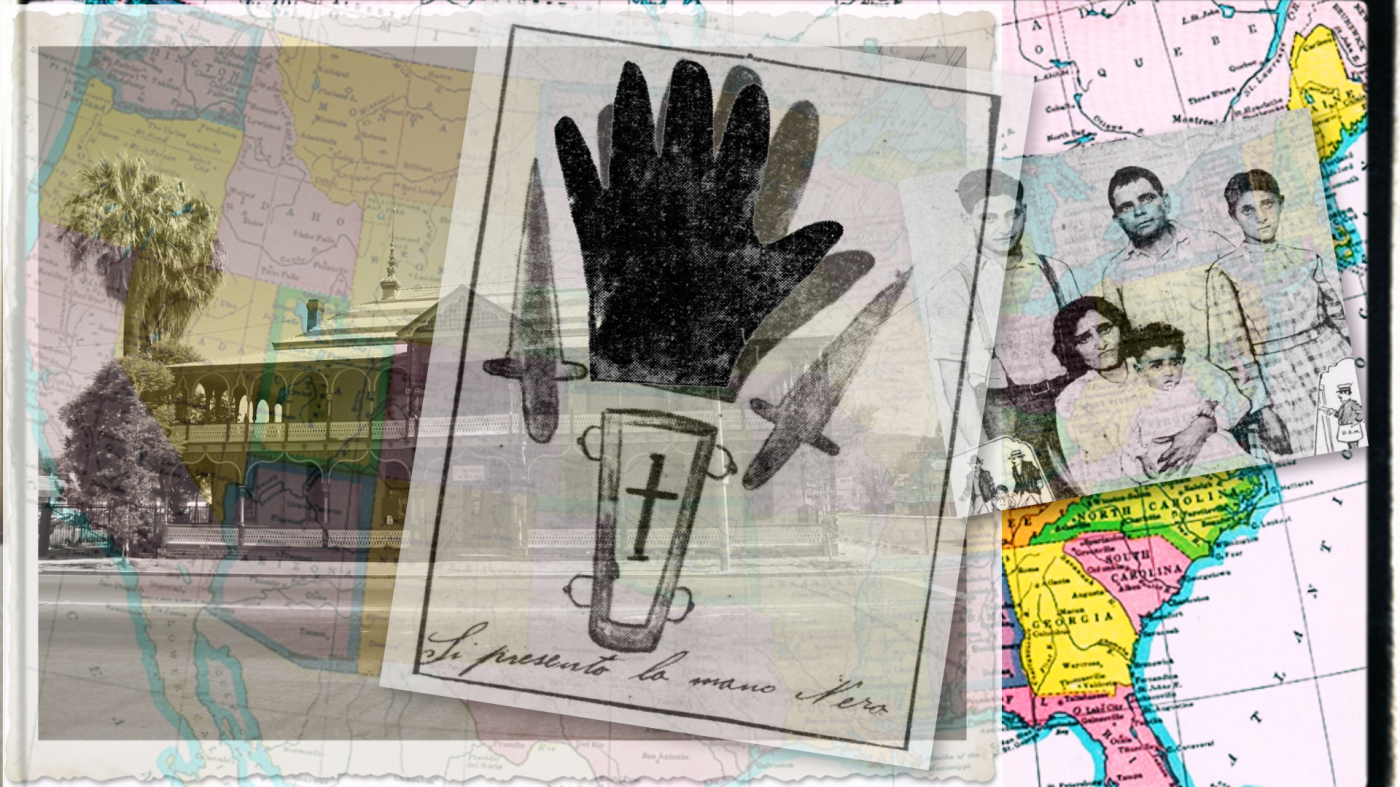
Giuseppe Morello wrote a letter to his peer in Chicago, Rosario Dispenza, which was seized by police in November 1909. Signed by Morello and a number of important gangsters from New York, its main subject was Calogero Constantino. A year and a half later in Chicago, Constantino took part in a kidnapping. He and a family member of six-year old Angelo Marino held the boy captive until the ransom was paid, then escaped justice.
Calogero Constantino was born in 1878 in Corleone, Sicily. His mother, Angela Milone, was born there in the revolutionary year of 1848 to unknown parents.[1] Still single at 24, she gave birth to Calogero’s older brother in Corleone: a boy who was named Francesco Costantino. At his birth, Francesco’s father, Giovanni Costantino, recognized him and gave him his surname. Angela married Giovanni in 1873.[2]
Giovanni Costantino, who was forty-one years older than Angela, died after four years of marriage in December 1877.[3] Ten months after his death, Calogero Constantino was born. The record of his baptism calls him the natural son of Angela Milone and the late Giovanni Costantino.[4]
Angela remarried in 1881 to Carlo Constantino, who like Angela was surrendered to the foundling wheel in Corleone as a newborn.[5] Angela’s first husband, Giovanni Costantino, had been the legitimate son of a married couple with deep roots in Corleone.[6] Because of the conditions of Angela and Carlo’s births, we may never know their origins beyond that they were most likely born in Corleone, or what relation, if any, existed between Angela’s husbands. Giovanni was old enough to be Carlo’s father.
Occasionally foundlings in Corleone were raised by the wetnurses the Church assigned them to. They grew up in their homes as unofficial adoptees, and were known by the surname of their nurse’s husband. While I was able to find Angela Milone’s baptismal record, I could not positively identify which of several abandoned boys who were baptized Carlo in Corleone grew up to be known as Carlo Constantino. His age appears in one document I’ve found: Carlo and Angela’s son, Salvatore’s birth in 1884.[7]
Note the slight difference in the spellings of Carlo and Giovanni’s surnames. Only at his burial was Giovanni called “Constantino.” In all other records I’ve found for him, including Calogero’s birth, his name is “Giovanni Costantino.” (Neither of these surnames should be confused for “Cosentino,” which is another distinct surname in this region.) None of these surnames appear in a foundlings’ baptism (or burial) in Corleone in 1845.
Sometimes a child was baptized “ex ignoto,” of unknown parents, but not left on the foundling wheel. The parents were informally recognized, and may have raised their child together. They might have eventually married, as Angela and Giovanni did, and legitimized their children’s births. There have been several notable cases in Corleone of middle-class gangsters, mafiosi borgesi, having illegitimate children who were raised with all the advantages of their birth and class. Mariano Marsalisi, the New York City narcotics trafficker, is one such person.[8]
Calogero’s older brother, Francesco, was born in 1872, the year before their parents married.[9] The civil record of their younger half-brother, Salvatore’s birth in 1884 describes him as being born out of wedlock, but his baptismal record does not, which indicates this family were among those whose protest of the new Italian state led to their refusal to register their religious unions.[10]
Considering the months that elapsed between the death of the elderly Giovanni Costantino and Calogero’s birth, and his mother’s remarriage to Carlo Constantino three years later, it is possible Calogero was Carlo’s son. “Carlo” and “Calo” are both common nicknames for Calogero, and Carlo’s name may have been an unsubtle reference to his paternity.
According to his naturalization petition, Calogero Constantino arrived in New York on the Sardinia (actually the Sardegna) on 8 October 1902. I’ve checked every page of the manifest and he is not listed as a passenger.[11] That he made it to Manhattan is clear from his marriage there in April 1903 to fellow corleonese Giovannina La Maritata. Tragically, his new bride died four months after they were wed.[12] Her death record has not yet been indexed on DORIS, so the cause is currently unknown. She was buried in Queens.[13
Calogero married again the following summer in Chicopee, Kansas to Maria Bavuso.[14] Chicopee is about 128 miles south of Kansas City.
Bavuso arrived in the United States in 1901 with a two-year old daughter, Angelina, who appears with Calogero and Maria in the 1905 state census.[15] Bavuso and her daughter were going to join Maria’s father, Calogero Bavuso, in Pittsburgh, PA. His travel manifest from the previous year gives the same indications as Maria’s, that their family had last resided in Chiusa Sclafani, in Sicily.[16] According to Calogero Constantino’s 1920 declaration of intention to naturalize, Maria was born 13 March 1880 in “San Carlo,” which could be a lot of places in Italy, but also happens to be the name of a hamlet administered by the comune of Chiusa Sclafani.
I have not been able to find birth records for Maria, her father, or her daughter. Based on my reviews of several years’ indices of births and marriages, the Bavuso name does not occur at all in that comune. An Italian cognome map indicates that in all of Sicily, only the provincial capitals of Palermo, Caltanissetta, and Agrigento have Bavusos living in them today.[17] When Maria and Angela sailed the manifest indicated Maria was married. The indices for marriages in Chiusa only name the grooms, so I checked each of the birth records for girls named Angela born in Chiusa in 1897-1900, looking for Maria Bavuso’s name as the mother, but it does not appear that she was born there.
There is another Morello gangster, Carlo Costantino, born in 1874 in Partinico.[18] He arrived in New York City in 1905, after the corleonese left New York for points west. It was this gangster who Eric Stonefelt reminded viewers of The Mob Archeologists’ podcast in 2022 could easily be confused with Calogero Constantino.
The 1908 letter found by police in a raid on the Morello home had been stuffed hastily into a diaper by Morello’s second wife, Lena Salemi. Morello described Constantino as being from a good family but said he had not been “dealt with directly by the people of Corleone,” which is taken to mean he was not made into the Mafia there.[19]
In the letter Morello indicated that Calogero Constantino was detained in the newly constructed company town of Bogalusa, Louisiana.[20] That summer, the Black Hand blew up the home and store of Joseph Serio in New Orleans, 75 miles south. The suspects were led by a young “Joe Caronio”: alias of the powerful mafioso, Vito Di Giorgio. Di Giorgio was in the mill business and owned a bar room in Bogalusa before the Serio bombing, and was known there as “Vincent Bartolotta.”[21] Another source says that he had a truck farm business with his brother, Steve Bartolotto, in Bogalusa.[22]
Di Giorgio’s alleged brother was a labor agent for the lumber company that built Bogalusa. Before that, he’d been in the macaroni business with Di Giorgio in New Orleans. In July 1908 Steve Bartolotto was a Bogalusa storekeeper, and the chief suspect in a murder. His alleged victim, John Chipari, was said to be a member of the Black Hand, and had been the suspect in two earlier murders. Bartolotto was sought by police after the abduction of Walter Lamana in New Orleans. (In June 1907, the Lamana boy was kidnapped and killed.) He claimed self defense in the shooting of Chipari, but police doubted him because of his former association with Di Giorgio.[23]
I haven’t found any evidence that Constantino was involved or suspected in any of these crimes. There is just Morello’s letter, which I and others reading it have difficulty understanding because of Morello’s idiomatic Sicilian and the strange turns of phrase he employed to obscure his meaning. What comes across clearly is that Morello is aggravated that Constantino is still in Bogalusa, but whether he wanted him dead or alive is unclear. He seems equally incensed about Constantino’s coordinates as his “severely good health.”[24]
Some, if not all, members of the Constantino family made it to Chicago before Morello’s letter was written. Angelina, the girl who came with Maria Bavuso from Sicily, was the eldest child in the household in the 1910 census, enumerated in April, which found the whole family in Chicago’s Little Sicily neighborhood.[25] The rest of the children’s birth info draws the Costantinos’ migration from Kansas, where the next oldest, Archangeline, age five, was born, to Illinois where Carlo, three, and Samuel, four months, were born.[26]
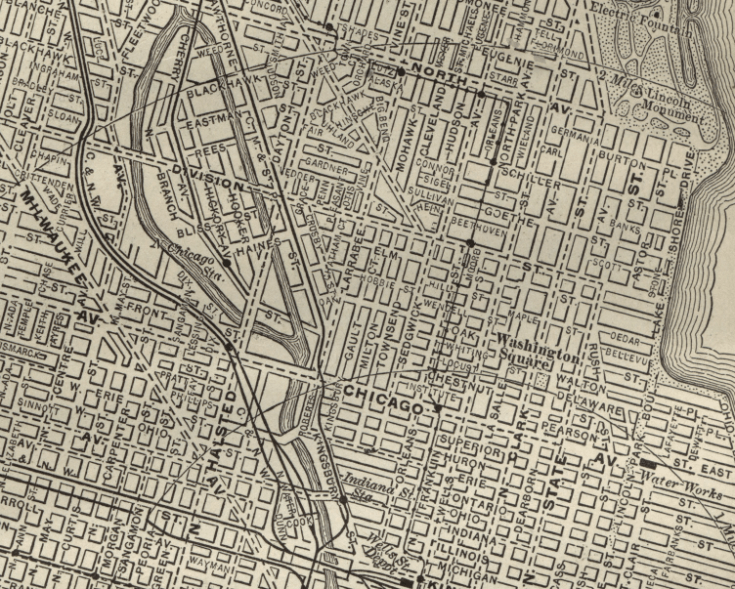
Townsend Street, where the Marino family lived in 1910, is two blocks east of Gault Court, where Angelo Marino was abducted in 1911. Some of the street names have changed, but you can still find Larrabee and Oak Streets, a short block from the nearest intersection to where the Marino family lived.
In Corleone and throughout much of southern Italy, the firstborn son is named after his father’s father. Notably, neither of Constantino’s sons is named Giovanni or John. Calogero was raised by Carlo, his mother’s second husband, who might have also been his biological father. His wife Maria’s father was named Calogero Bavuso. Carlo Constantino, age three, might have been named to honor both of his grandfathers, especially considering infant Samuel wasn’t named Calogero. “Angelina” and “Archangeline” were deemed acceptable names for sisters in this family, so there’s little reason to believe “Calogero” was discarded as too similar to “Carlo.” It does strongly suggest that Maria’s mother’s name was Archangela.
In 1911, six-year old Angelo Marino was kidnapped off the streets of Chicago’s Little Sicily. Calogero Constantino and another corleonese, Leoluca Macaluso, were accused of hiding the boy until the ransom was paid. Leoluca, or Louis, was seen pulling a wagon away from the scene of the kidnapping with Angelo riding in the wagon.[27] Louis was married to Angelo’s cousin, Calogera Canzoneri, who had lived with the Marino family upon her arrival in the US.[28] Macaluso and Constantino were charged, but evaded arrest.[29] The kidnapping and trial were widely publicized but Constantino never stood trial.
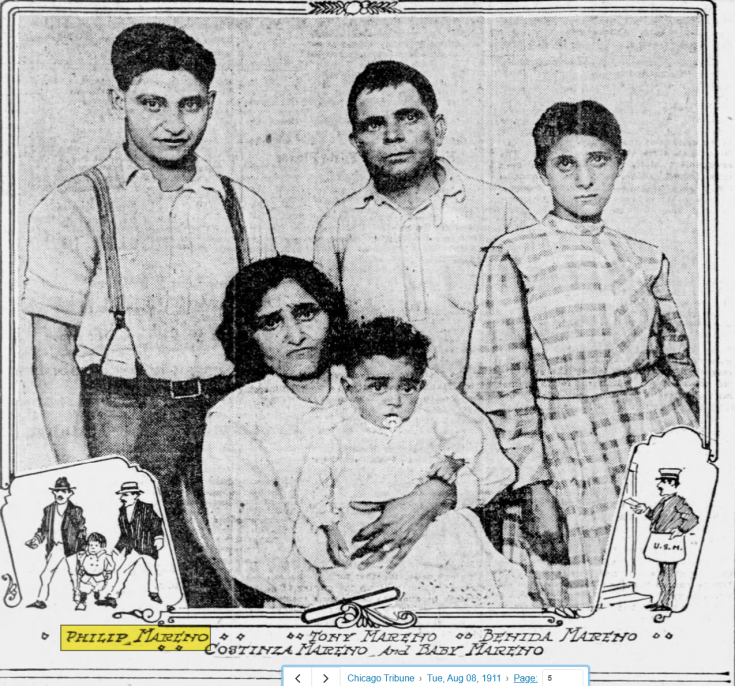
Image of the Antonino Marino family, with inset illustrations of the kidnapping of Angelo Marino and delivery of Black Hand letters, printed in the Chicago Tribune (1911).
He appears in 1920 living in San Diego, California, with his wife and children. Angeline, the eldest daughter, was no longer living at home in 1920. Because I’ve never found a record of her last name at birth, I haven’t been able to find her marriage or subsequent records.
The family were recorded in a January census, and Calogero declared his intention to naturalize in March.[30] he followed up with a petition for naturalization in 1922 where he repeated the facts from his declaration and added birthdates for his wife and children.[31] Calogero, now called Charles, wasted no time in making a political endorsement for a justice of the peace.[32]
He was employed at menial jobs all his working life. In Chicago, Charles Constantino was a laborer in the building industry. In San Diego, he was a cement worker. He was injured while working in the sewers as a city employee.
In 1927, Charles Constantino was granted a building permit to put an addition on his home at 332 20th St, where the family lived until at least 1950.[33] That summer, at age fifty, Charles was injured in the cave-in of a sewer trench and his arm was broken.[34] Three years later, his disability claim was still being brought up by city councilmen as they argued for privatizing workers compensation insurance for city employees.[35] (They eventually dropped the plan.)
In the 1910 census taken in Chicago, the younger of Calogero’s two sons was four months old, putting his birth in December 1909 or January 1910.[36] Sam Constantino claimed to be 21 when he married Marguerite Lambert on the seventeenth of November, 1928 in Santa Ana, California.[37] Their son, Ralph, was born the following May, suggesting Marguerite was three months pregnant when they wed.[38] It appears the timing of the marriage, five days after Marguerite’s nineteenth birthday, plus Sam’s lie about his own age, were engineered so the couple could marry without the consent of either parent.[39] If there were hard feelings from Sam’s parents over the elopement, they got over it, because the young couple and their baby lived with Charles and Maria.
The year after Sam married, his older brother Carlo returned to Chicago to marry Rose Marsala, the native-born daughter of immigrants from Lercara Friddi.[40] Both Carlo and Sam were iron workers. In the 1930 census, Sam—called Salvadore—supported his parents and young family while Carlo and Rose had their own place a few miles away.[41] Their only child, Donald, was born in November 1931.[42]
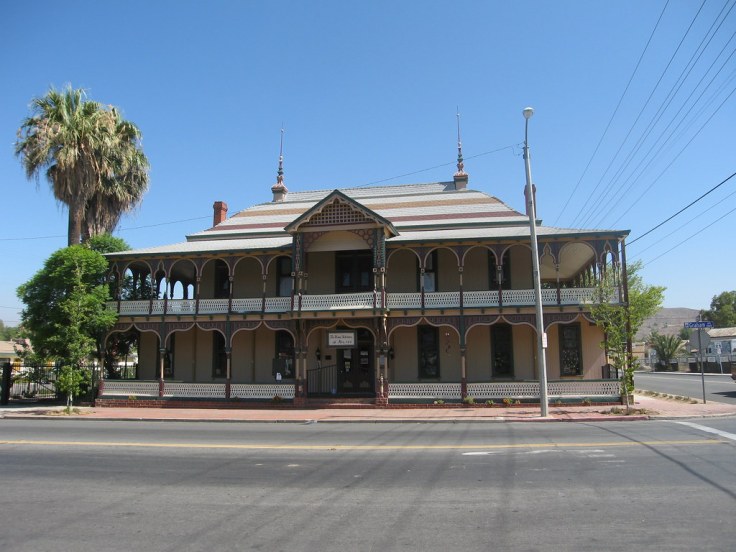
Built as the Crescent Bath House in 1887, this building is one of the oldest in Elsinore, California. Image credit: miheco/Flickr
In the summer of 1933, Carlo Costantino suffered a paralytic condition that resulted in him being laid off from work for two months.[43] In August, he and his wife traveled to Lake Elsinore, in Riverside County, California, where Carlo could partake of the healing baths. On their first day in Elsinore, Carlo succumbed to heat stroke in a local bath house, and died a few hours later.[44]
His father, the former gangster, lived peacefully in San Diego, in the house on 20th St he remodeled in 1927. He died on 27 August 1959 at eighty years of age.[45] Charles Constantino’s widow, the former Maria Bavuso, lived to be ninety and is buried with her husband in San Diego’s Holy Cross Cemetery.[46]
[1] “Italia, Palermo, Palermo, Stato Civile (Tribunale), 1866-1910,” images, FamilySearch (https://familysearch.org/ark:/61903/3:1:3QS7-997B-Y3JN?cc=2051639&wc=MCTM-F38%3A351055601%2C352253401%2C352294401 : 22 May 2014), Palermo > Corleone > image 572 of 1157; Tribunale di Cagliari (Cagliari Court, Cagliari).
[2] Marriage of Joannis Costantino and Angela Milone, record no. 215, 13 October 1873, “Italia, Palermo, Diocesi di Monreale, Registri Parrocchiali, 1531-1998,” images, FamilySearch (https://familysearch.org/pal:/MM9.3.1/TH-266-11622-15326-93?cc=2046915 : 20 May 2014), Corleone > San Martino > Matrimoni 1872-1887 > image 87 of 535; Archivio di Arcidiocesi di Palermo (Palermo ArchDiocese Archives, Palermo).
[3] Death of Joannes Costantino. (1877, December 18). P. 299.”Italia, Palermo, Diocesi di Monreale, Registri Parrocchiali, 1531-1998,” database with images, FamilySearch (https://familysearch.org/ark:/61903/3:1:S3HT-69D9-DBR?cc=2046915&wc=MG3W-JWL%3A351041801%2C351041802%2C351076101 : 20 May 2014), Corleone > San Martino > Morti 1873-1888 > image 210 of 600; Archivio di Arcidiocesi di Palermo (Palermo ArchDiocese Archives, Palermo).
[4] Baptism of Calogerum Costantino. (1878, October 3). P. 334. “Italia, Palermo, Diocesi di Monreale, Registri Parrocchiali, 1531-1998,” database with images, FamilySearch (https://familysearch.org/ark:/61903/3:1:S3HT-6LSS-67L?cc=2046915&wc=MG34-SPX%3A351041801%2C351041802%2C351275901 : 20 May 2014), Corleone > San Martino > Battesimi 1877-1879 > image 107 of 182; Archivio di Arcidiocesi di Palermo (Palermo ArchDiocese Archives, Palermo).
[5] Marriage of Carolus Costantino and Angela Milone. (1881, December 30). Record no. 219. “Italia, Palermo, Diocesi di Monreale, Registri Parrocchiali, 1531-1998,” database with images, FamilySearch (https://familysearch.org/ark:/61903/3:1:S3HT-DYDV-Q8?cc=2046915&wc=MG37-L29%3A351041801%2C351041802%2C351107101 : 20 May 2014), Corleone > San Martino > Matrimoni 1872-1887 > image 314 of 535; Archivio di Arcidiocesi di Palermo (Palermo ArchDiocese Archives, Palermo).
[6] Interested readers are invited to review the research on Giovanni Costantino’s family tree available to the public at https://www.wikitree.com/wiki/Costantino-41
[7] Atto di nascita, Salvatore Costantino. (1884, August 14). Record no. 472. “Italia, Palermo, Palermo, Stato Civile (Tribunale), 1866-1910,” database with images, FamilySearch (https://familysearch.org/ark:/61903/3:1:3QS7-897B-VLLB?cc=2051639&wc=MCTM-DTL%3A351055601%2C352253401%2C352269501 : 22 May 2014), Palermo > Corleone > Nati, pubblicazioni, matrimoni, cittadinanze, morti 1882-1893 > image 617 of 3063; Tribunale di Cagliari (Cagliari Court, Cagliari).
[8] See the referenced biography for Mariano Marsalisi on WikiTree: https://www.wikitree.com/wiki/Marsalisi-122 See also Giovanni Streva: https://www.wikitree.com/wiki/Streva-63
[9] Baptism of Franciscum Costantino. (1872, February 7). “Italia, Palermo, Diocesi di Monreale, Registri Parrocchiali, 1531-1998,” database with images, FamilySearch (https://familysearch.org/ark:/61903/3:1:S3HT-DYM7-S5K?cc=2046915&wc=MG37-K6D%3A351041801%2C351041802%2C351142201 : 20 May 2014), Corleone > San Martino > Battesimi 1872-1877 > image 63 of 419; Archivio di Arcidiocesi di Palermo (Palermo ArchDiocese Archives, Palermo).
[10] Atto di nascita, Salvatore Costantino. (1884, August 14). Record no. 472. “Italia, Palermo, Palermo, Stato Civile (Tribunale), 1866-1910,” database with images, FamilySearch (https://familysearch.org/ark:/61903/3:1:3QS7-897B-VLLB?cc=2051639&wc=MCTM-DTL%3A351055601%2C352253401%2C352269501 : 22 May 2014), Palermo > Corleone > Nati, pubblicazioni, matrimoni, cittadinanze, morti 1882-1893 > image 617 of 3063; Tribunale di Cagliari (Cagliari Court, Cagliari); Baptism of Salvator Costantino. (1884, August 15). Record no. 462. “Italia, Palermo, Diocesi di Monreale, Registri Parrocchiali, 1531-1998,” database with images, FamilySearch (https://familysearch.org/ark:/61903/3:1:S3HT-6LSS-VPV?cc=2046915&wc=MG34-SP6%3A351041801%2C351041802%2C351287601 : 20 May 2014), Corleone > San Martino > Battesimi 1884-1888 > image 57 of 398; Archivio di Arcidiocesi di Palermo (Palermo ArchDiocese Archives, Palermo).
[11] Manifest images on assets-heritage.statueofliberty.org accessed via SteveMorse Ship Lists search. Series T715. Roll 302. Frames 74-162.
[12] “New York, New York City Municipal Deaths, 1795-1949”, FamilySearch (https://www.familysearch.org/ark:/61903/1:1:2WXJ-JS2 : Wed Mar 26 22:22:56 UTC 2025), Entry for Jennie Costantino and Carmelo Lamaritata, 13 Aug 1903.
[13] Find a Grave, database and images (https://www.findagrave.com/memorial/119642724/jennie-costantino: accessed May 7, 2026), memorial page for Jennie Lamaritata Costantino (1884–13 Aug 1903), Find a Grave Memorial ID 119642724, citing Calvary Cemetery, Woodside, Queens County, New York, USA; Maintained by Diane Payne (contributor 46850881).
[14] Year Range: 1904 – 1907 Ancestry.com. Kansas, U.S., County Marriage Records, 1811-1911 [database on-line]. Lehi, UT, USA: Ancestry.com Operations, Inc., 2016.
[15] Manifest of the SS Aller. (1901, October 23). Lines 1-2. https://www.statueofliberty.org/arrival-details/?id=JFJW-PJ9; Kansas State Historical Society; Topeka, Kansas; 1905 Kansas Territory Census; Roll: ks1905_38; Line: 8 Ancestry.com. Kansas, U.S., State Census Collection, 1855-1925 [database on-line]. Provo, UT, USA: Ancestry.com Operations, Inc., 2009.
[16] “New York City, New York, United States records,” images, FamilySearch (https://www.familysearch.org/ark:/61903/3:1:3Q9M-CSSJ-L9Z8-M?view=explore : May 8, 2026), image 1925 of 8119; United States. National Archives and Records Administration. Image Group Number: 007823260
[17] https://www.mappadeicognomi.it/en/index.php?sur=Bavuso Accessed 8 May 2026
[18] Baptism of Costantino Carolus. (1874, January 20). Record no. 62. “Italia, Palermo, Diocesi di Monreale, Registri Parrocchiali, 1531-1998,” database with images, FamilySearch (https://familysearch.org/ark:/61903/3:1:9Q97-YMX9-8F2?cc=2046915&wc=MGSB-K6F%3A351041001%2C351041002%2C351043501 : 21 October 2025), Partinico > Maria Santissima Annunziata > Battesimi 1872-1874 > image 148 of 237; Archivio di Arcidiocesi di Palermo (Palermo ArchDiocese Archives, Palermo).
[19] Critchley, D. (2009). The origin of organized crime in America: The New York City Mafia, 1891-1931. Routledge, p. 54.
[20] Flynn, W.J. (1919). The Barrel Mystery. James A. McCann Company; The Mob Archeologists. (2022, December 14). Document Review: Giuseppe Morello’s 1908 letter to Rosario Dispenza of Chicago. https://www.youtube.com/watch?v=z8nD4f9BdrI
[21] Black Hand letters tell of plot to obtain money. (1908, June 12). The Times-Democrat [New Orleans, LA]. P. 5.
[22] That Bogalusa story doubted. (1908, July 2). The Daily States [New Orleans, LA]. P. 11.
[23] Bogalusa Black Hand. (1908, July 2). The Times-Picayune. P. 13.
[24] Flynn, W. J. (1919). The barrel mystery. James A. McCann Co. Project Gutenberg [website]. P. 210.
[25] “Illinois, United States records,” images, FamilySearch (https://www.familysearch.org/ark:/61903/3:1:33SQ-GRNV-9GW?view=explore : May 7, 2026), image 1195 of 1230; United States. National Archives and Records Administration. Image Group Number: 004970775
[26] The National Archives in Washington, DC; Washington, Dc; (Roll 07) Petitions For Citizenship 1443-1884; 1920-1925; Record Group Title: National Archives Gift Collection; Record Group Number: 200 Description: Superior Court For California, San Diego, 1907-1930 Ancestry.com. California, U.S., Federal Naturalization Records, 1843-1999 [database on-line]. Lehi, UT, USA: Ancestry.com Operations, Inc., 2014.
[27] Father ransoms kidnaped child? (1911, August 9). Chicago Tribune. P. 3.
[28] Atto di nascita, Calogera Canzoneri. (1886, February 28). Record no. 109. “Italia, Palermo, Palermo, Stato Civile (Tribunale), 1866-1910,” database with images, FamilySearch (https://familysearch.org/ark:/61903/3:1:3QS7-897B-VKYZ?cc=2051639&wc=MCTM-DTL%3A351055601%2C352253401%2C352269501 : 22 May 2014), Palermo > Corleone > Nati, pubblicazioni, matrimoni, cittadinanze, morti 1882-1893 > image 1155 of 3063; Tribunale di Cagliari (Cagliari Court, Cagliari); Manifest of the Calabria. (1905, September 2). Line no. 9. Statue of Liberty Ellis Island Foundation [Website]. https://www.statueofliberty.org/arrival-details/?id=JFWD-V4C; “Illinois, Chicago, Catholic Church Records, 1833-1925,” database with images, FamilySearch (https://familysearch.org/ark:/61903/3:1:S3HY-63BQ-3P2?cc=1452409&wc=M66P-8M9%3A40316301%2C40440701 : 20 May 2014), St Philip Benizi Parish (Chicago: Oak St) > Baptisms 1906-1912 > image 137 of 949; Catholic Church parishes, Chicago Diocese, Chicago.
[29] Penalty is heavy. (1911, October 21). The Saturday Blade (Chicago). P. 11.
[30] “California, United States records,” images, FamilySearch (https://www.familysearch.org/ark:/61903/3:1:33SQ-GRN8-28Q?view=explore : May 7, 2026), image 236 of 1111; United States. National Archives and Records Administration. Image Group Number: 004964313; “San Diego, California, United States records,” images, FamilySearch (https://www.familysearch.org/ark:/61903/3:1:3Q9M-CSMY-S9TN-L?view=explore : May 8, 2026), image 563 of 1526; United States. National Archives and Records Administration. Pacific Southwest Region. Image Group Number: 007785864
[31] The National Archives in Washington, DC; Washington, Dc; (Roll 07) Petitions For Citizenship 1443-1884; 1920-1925; Record Group Title: National Archives Gift Collection; Record Group Number: 200 Description: Superior Court For California, San Diego, 1907-1930 Ancestry.com. California, U.S., Federal Naturalization Records, 1843-1999 [database on-line]. Lehi, UT, USA: Ancestry.com Operations, Inc., 2014.
[32] Newly naturalized citizens indorse De Long for office. (1922, October 14). The San Diego Sun. P. 11.
[33] Building permits. (1927, February 5). The San Diego Sun. P. 33.
[34] Cave-in buries city employe. (1927, September 8). The San Diego Sun. P. 1.
[35] Fight renewed on insurance. (1930, August 25). The San Diego Sun. P. 13; Reach compromise on city liability. (1930, November 25). The San Diego Sun. P. 3.
[36] “Illinois, United States records,” images, FamilySearch (https://www.familysearch.org/ark:/61903/3:1:33SQ-GRNV-9GW?view=explore : May 7, 2026), image 1195 of 1230; United States. National Archives and Records Administration. Image Group Number: 004970775
[37] “California, Marriages, 1850-1945”, , FamilySearch (https://familysearch.org/ark:/61903/1:1:H9HS-NKN2 : 24 March 2020), Sam Costantino, 1928.
[38] “California, Birth Index, 1905-1995”, FamilySearch (https://www.familysearch.org/ark:/61903/1:1:VGX2-LDN : Tue Feb 25 23:00:23 UTC 2025), Entry for Ralph Charles Costantino and Lambert, 12 May 1929.
[39] “California, Birth Index, 1905-1995”, FamilySearch (https://www.familysearch.org/ark:/61903/1:1:VGK4-LDZ : Tue Feb 25 23:15:01 UTC 2025), Entry for Margaret Lambert and Shryock, 13 Nov 1909.
[40] Manifest of the Karamania. (1898, July 26). Line 3. Statue of Liberty Ellis Island Foundation [Website]. https://www.statueofliberty.org/arrival-details/?id=JXH4-9MV; “Illinois, Cook County Marriages, 1871-1969”, FamilySearch (https://www.familysearch.org/ark:/61903/1:1:Q21K-LR3Z : Sun Jan 19 18:41:57 UTC 2025), Entry for Carlo Costantino Or Constantino and Rose Marsalla, 21 Sep 1929.
[41] “California, United States records,” images, FamilySearch (https://www.familysearch.org/ark:/61903/3:1:33SQ-GR4F-NCQ?view=explore : May 10, 2026), image 1007 of 1095; United States. National Archives and Records Administration. Image Group Number: 004950181
[42] “United States, Social Security Numerical Identification Files (NUMIDENT), 1936-2007”, FamilySearch (https://www.familysearch.org/ark:/61903/1:1:6KQH-DF72 : Sun Oct 19 03:04:12 UTC 2025), Entry for Donald Costantino and Carlo Costantino.
[43] Fireman victim of sunstroke. (1933, August 11). The San Diego Sun. P. 15.
[44] Heat brings man’s death at Elsinore. (1933, August 12). Riverside Daily Press [CA]. P. 2.
[45] Find a Grave, database and images (https://www.findagrave.com/memorial/193993541/calogero-costantino: accessed May 10, 2026), memorial page for Calogero Costantino (3 Oct 1878–27 Aug 1959), Find a Grave Memorial ID 193993541, citing Holy Cross Cemetery, San Diego, San Diego County, California, USA; Maintained by pLot Lzrd (contributor 49252771).
[46] Find a Grave, database and images (https://www.findagrave.com/memorial/208461973/maria-costantino: accessed May 10, 2026), memorial page for Maria Bavuso Costantino (13 Mar 1880–27 Feb 1971), Find a Grave Memorial ID 208461973, citing Holy Cross Cemetery, San Diego, San Diego County, California, USA; Maintained by pLot Lzrd (contributor 49252771).


Leave a Reply