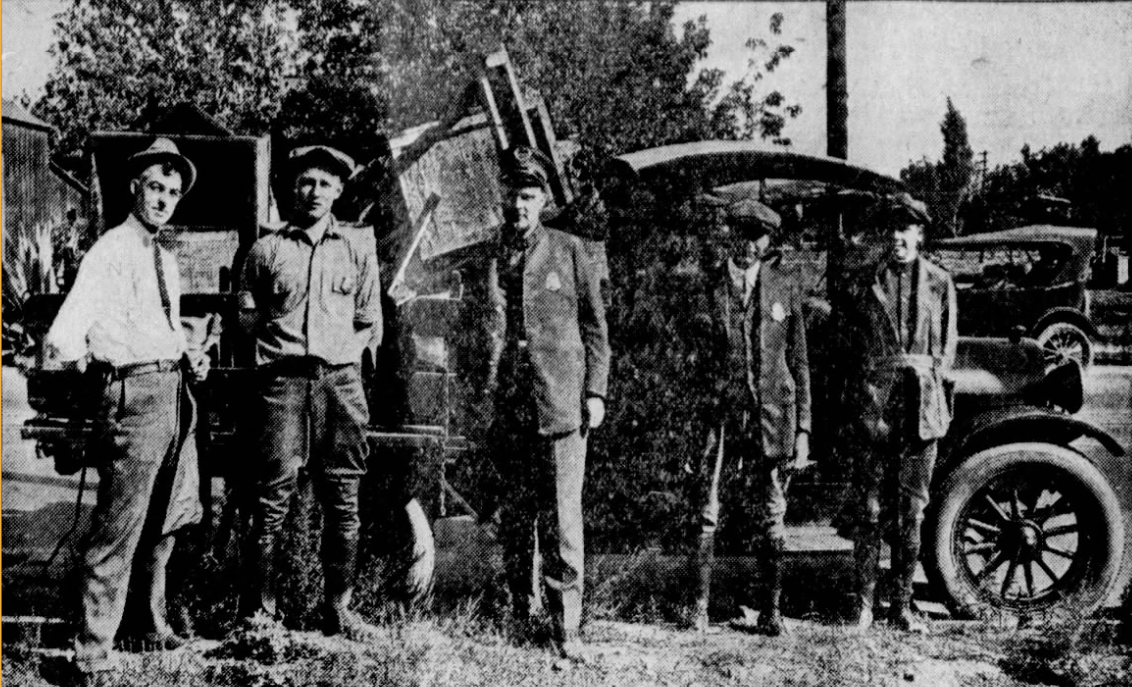
Two of the Canzoneri brothers worked closely with Jack Dragna during Prohibition.
There’s a somewhat distant family connection between the Canzoneri and Dragna families of Corleone. John and Tony Canzoneri’s maternal grandmother married twice; through her first husband, her great-grand niece was Francesca Rizzotto: Jack Dragna’s mother.
John Canzoneri’s parents and eldest brother, Gus, were some of the first migrants from Corleone to settle in Los Angeles. John was the fourth of seven children. His father, Girolamo, bought a home in Boyle Heights and worked first as a farmer, then switched to the profession of his older brother Joseph, who was a fruit merchant. Girolamo Canzoneri’s four eldest sons, Gus, John, James, and Joe, followed suit, at least overtly. John and Joe also briefly operated wine bars in the years before Prohibition.
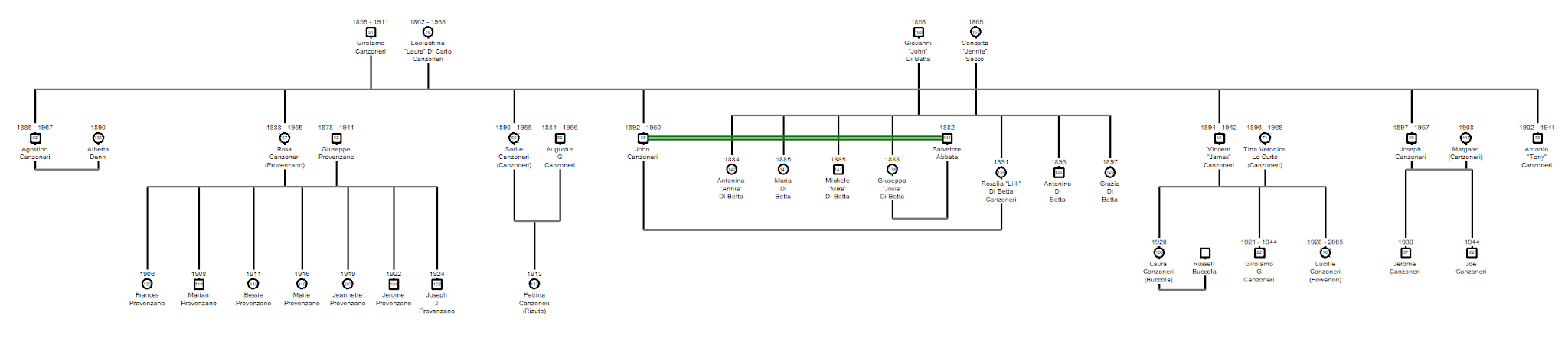
One of John Canzoneri’s enterprises was the Eastern Wine & Liquor Company, which he operated at 708 Mateo Street with Salvatore Abbate. John Canzoneri and Salvatore Abbate were married to sisters Josie and Lillian Di Betta. Abbate was formerly a jeweler in Tampa, Florida, where he married Giuseppa “Josie” Di Betta in 1906. The newlyweds moved almost immediately to Los Angeles. Giovanni Di Betta, the father of the sisters, was from Santo Stefano Quisquina, in Sicily. In Tampa, Florida, he ran a grocery. The Di Bettas moved to Los Angeles by the time Lillian married John Canzoneri in 1914.
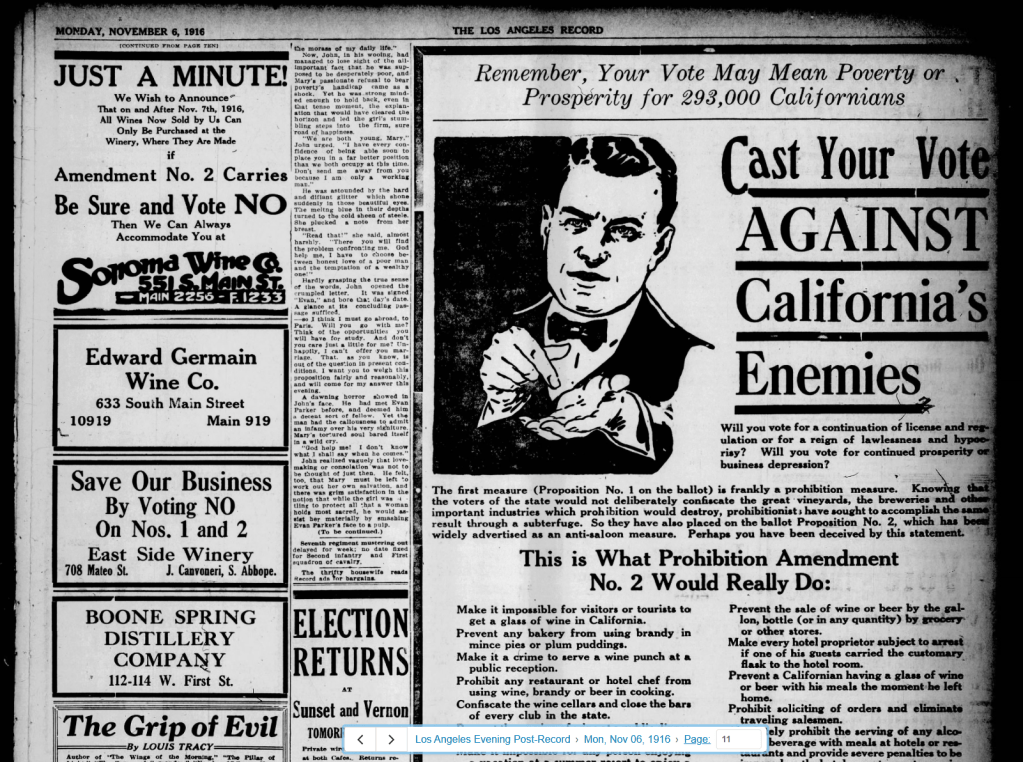
John and Salvatore’s partnership only existed for about a year. In August 1917, John Canzoneri announced his retirement from the firm and specified that he would not be responsible for any future debts contracted by his old business partner.
Besides John’s brothers in the fruit trade, he had two sisters, Rose and Sadie, and one more brother: youngest child Antonio. Rose married Joseph Provenzano, who was born in Corleone. Sadie married Augustus G. Canzoneri, who was born in New Orleans in 1884, and is of unknown relation to Sadie. His birth record has not been found.
Girolamo Canzoneri died of tuberculosis in 1911. Rosie and Sadie were married already, and the five brothers lived at home with their mother, Laura. Antonio was only six when he lost his father. Gus and John married in the next couple of years; John brought his bride home to live under his mother’s roof. James married and moved in next door.
If your images of Los Angeles come primarily from the movies, the county lands in those days were more “East of Eden” than “Double Indemnity.” Augustus and Sadie led their family’s move into the county to “ranch,” as they say there of raising citrus and vineyards rather than livestock. (The original European-generated deeds to land there was in the form of ranches, and the name has stuck.) They bought a home in La Cañada Flintridge, on the western edge of the San Gabriel Valley, in 1913 and Augustus began a farming partnership with his brother-in-law, Gus.
At some point not long after Girolamo died, Antonio went to live with his sister, Sadie, and brother-in-law Augustus in La Cañada. He attended schools there and when he was older, worked for local ranchers.
After Prohibition closed the wine bars, John Canzoneri became known for racing dogs, and for his association with Jack Dragna. The latter became generally known in 1930 when he was arrested with Dragna and John Roselli after a traffic stop. The men were found armed to the teeth with revolvers and a shotgun, the latter brandished by Canzoneri.
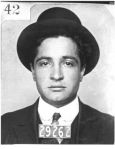
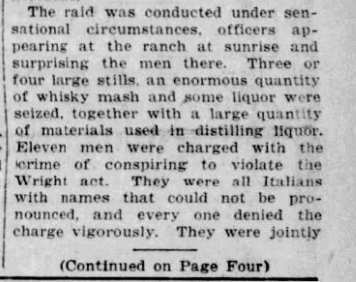
Seven years earlier, John Canzoneri’s little brother was charged, along with Jack and Tom Dragna, with conspiracy to violate the Wright Act. The Dragna brothers had recently purchased what was called the old Henry ranch near Walnut, about 20 miles south of La Cañada. Among those found on the property during the raid and arrested were Tom Dragna and his wife, Julia, Jack Dragna, Carmelo Sciortino, Giuseppe Bonventre, and Patsy Vasta. Detroit gangster Gaspare Milazzo, who was newly a resident of San Jose, was arrested on the ranch and charged under an alias: his wife’s surname, Scibilia.
The raid began early in the morning by stopping Tom Dragna on the road from the ranch, driving his two young children to school. The police misidentified him as Jack, escorted him back to the ranch, and arrested his wife.
Most everyone on the ranch was still asleep when the raid began. There were two homes on the property near the whiskey production barn, the larger of the two belonging to Jack Dragna, and the smaller occupied by Tom and Julia. Bonventre was found in bed, suffering what might have been gunshot injuries, but no one would say for certain.
The bootleggers brought attention to themselves by making large, frequent purchases of kerosene from local dealers. The kerosene was used to cook mash for whiskey. The equipment and supplies confiscated from a barn on the ranch included tons of sugar, thousands of gallons of liquor and mash, and enough equipment to supply southern California with all the high-quality, high proof whiskey it could drink.
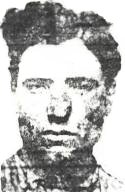
The Henry ranch raid was already being described as one of the biggest bootlegging operations in county history. Heightening the mystery, Joe Ardizzone and Tony Buccola showed up promptly after the raid to pay everyone’s bail. The men had $50,000 in cash and would have freed them all that night, if their arraignment were not put off til the following morning.
Police recognized from the size of the haul, combined with the bail and legal representation provided to everyone arrested, and the notoriety of the men involved, that this would be a difficult case to prosecute. No one involved in the operation had any motivation to testify. Coverage of the case, which was named the People v. Vesta, a misspelling of the only defendant’s surname Anglo Americans could pronounce, noted that the state had trouble telling the defendants apart.
Eighteen-year old Tony Canzoneri was on the Henry ranch that day, but escaped arrest. His identity was nonetheless ascertained and a bench warrant issued for him.
The raid was in September 1923 but the trial in superior court was delayed until the following February, when the charges against most of the men were dropped. Instead of conspiracy to violate the Wright Act and nuisance charges on all of the defendants, four of the eleven were found guilty of simple possession of liquor, and fined $300 each. The charges against the other seven were dismissed.
The combination of access to alcohol and the series of misfortunes, beginning with the early loss of his father and unexplained separation from his mother, led Tony Canzoneri to drink heavily. He returned to his mother’s home, where he appears in the 1930 census with his brothers Gus, Joseph, and John, and John’s wife, Lillian. His other brother, James, still lived next door. Tony worked with his brothers in the fruit business that year. Things seemed to fall apart again when his mother died unexpectedly in 1938. In 1940, Tony and his oldest brother Gus, now divorced, shared a home in Altadena.
Gus found his brother’s body at home on the fourth of April, 1941. Initially, his death was thought to have been caused by a heart attack, but it was determined through autopsy that he’d died from edema of the brain and lungs: likely caused by his heavy drinking. Tony was only 38. He never married.


Leave a Reply