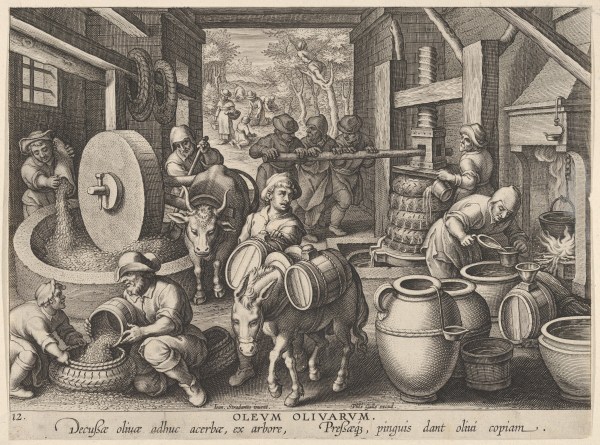
My father’s paternal grandparents, Louis Cascio and Lucia Soldano, immigrated as teenagers with their families and settled in East Harlem, on 106th Street. After they married, Lucia and her youngest brother, Tony, sold olive oil to their neighbors, produced and exported by Louis’ brother-in-law.
Capitano’s Lucchese connection
Some of the most telling of "Capitano" Angelo di Carlo’s associations are those who signed affidavits in support of his release from internment at Fort Missoula in the summer of 1943.
The Castellammarese War
The Castellammarese War of 1930 in New York was a colonial war. On one side was Joe Masseria, the most powerful figure in organized crime, with a coalition of allies including the Corleonesi Giuseppe Morello, Lucky Luciano (from Lercara Friddi), and Al Capone (born in New York of Italian mainland parents). On the other side were Salvatore Maranzano and the Castellammarese, backed by Don Vito Cascio Ferro, one of the most powerful men in Sicily....
The other Stefano la Sala
The fearsome criminal known as “The Clutch Hand,” because of the birth defect that crippled his right hand, was not a builder in the literal sense, but his Co-op was one of the earliest developers of Italian neighborhoods in East Harlem and the Bronx.
Looking for Steve LaSalle
There are three first cousins from Corleone who immigrated to New York around the same time, and had the same name: Stefano la Sala. One would become known as Steve LaSalle, a high-ranking member of the Lucchese crime family for half a century.
The Esperia Film Distributing Company
The Di Carlo family was persecuted by Italian Fascists in Sicily. That didn't stop them from becoming propagandists for Mussolini.
Francesco Macaluso and American Fascism
When the Fascists rose to power in 1922, it soon declared a war on the mafia in Sicily, nearly wiping them out, and forcing di Carlo to flee. Meanwhile, his future associate, a Fascist propagandist, was making a name for himself in the United States.
The First Great Wars
The rise of fascism in Italy nearly destroyed the Sicilian Mafia before the end of WWII, but due to the political blunders of the Allies following Operation Husky, the Mafia was able to reform itself under their protection. Angelo di Carlo, a veteran of the Italo-Turkish War in Libya, is considered one of the architects of this renaissance.